A business I build and operate
WavePoint.
Personal astrology, on screen and paper.
I’m the founder and operator of WavePoint. I’m responsible for the product, design, engineering, and day-to-day operation. Building it has taught me a great deal about working with AI and about bringing an idea into the world.
- My role
- Founder & operator
- Available today
- Birth charts, library, Moon Calendar
- In development
- iPhone & iPad app
The first visit
A birth chart
without sign-up.
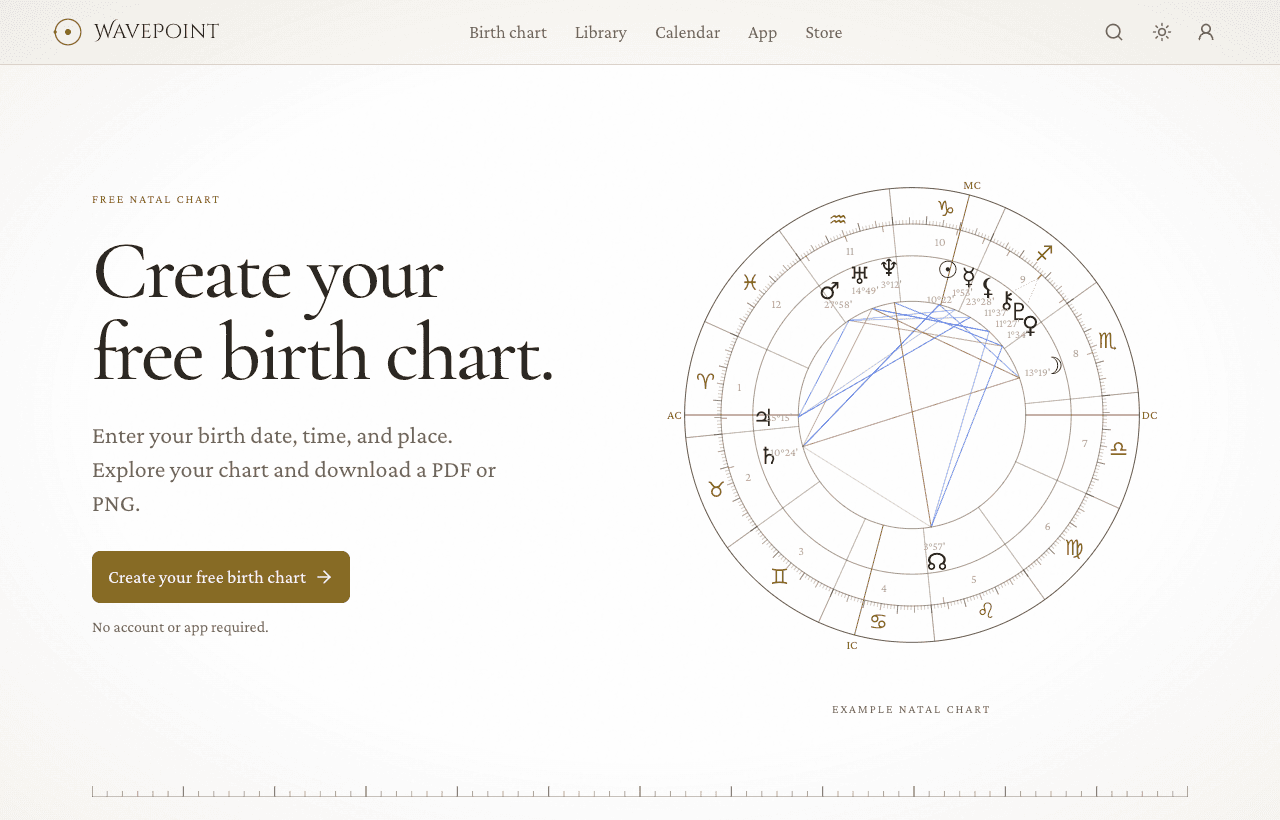
Visitors can create a birth chart and download a PDF or PNG without creating an account. A reference library gives them another way to explore astrology through the site.
I want someone to be able to try WavePoint and take something away from that first visit. They can make a chart, explore it, and keep a copy without signing up.
A physical product
A year
on paper.
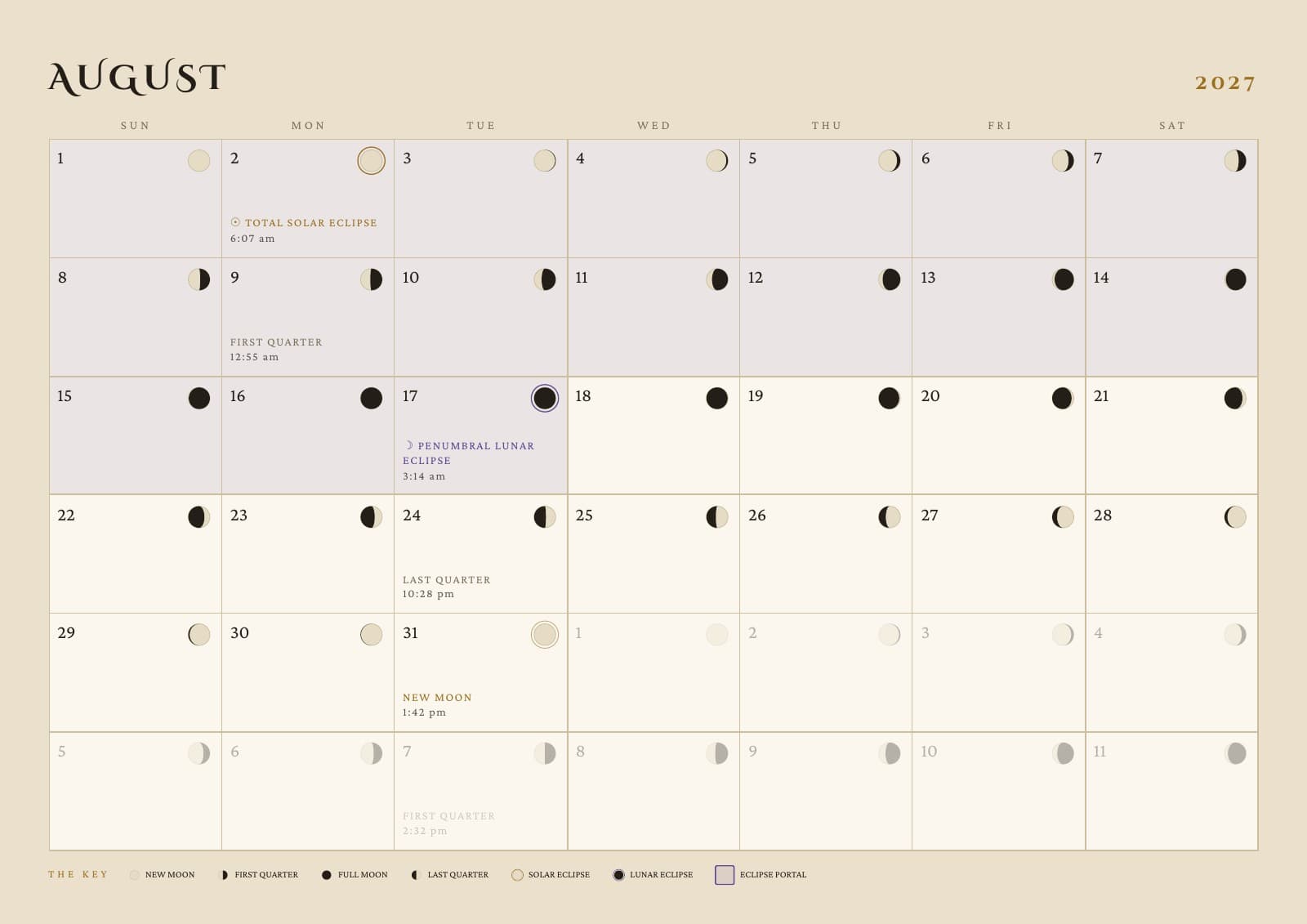
The 2027 Moon Calendar gives WavePoint a physical form. Published sample pages let people see what they’re buying.
Working on paper brings a different set of design questions. The page has a fixed size, so I have to think carefully about what belongs, what’s readable, and where someone’s eye goes first.
What I’ve learned building WavePoint
How I build
with AI.
Building WavePoint has changed how I work.
I use AI to research questions, explore designs, build prototypes, write code, and review the result. I make the decisions and stay responsible for the finished work.
-
Understand the problem.
I start with questions. Who is this for? What are they trying to do? I use the conversation to challenge assumptions and understand what would make the experience better.
-
Make the experience visible.
I use wireframes and clickable prototypes to see how an idea holds up. Trying the words, navigation, and behavior together often reveals things a written description misses.
-
Agree on what to build.
Once the direction is settled, I record what I’m building and how I’ll know it’s done. I use Linear to keep track of the work, decisions, and questions still to resolve.
-
Build and review.
I work with AI to write code, investigate problems, and question an approach. I review the changes and use tests to check the behavior that matters.
-
Check the experience in use.
I try the experience itself: different screens, keyboard navigation, and what happens when something goes wrong. I check the live result after release and keep track of what needs attention.
Working across models
The work continues
across tools.
I work with AI models from different labs. I keep the brief, designs, decisions, and working conventions with the project so I can continue across tools and sessions.
That gives me a way to compare perspectives and choose tools for the work at hand. I review what comes back and decide what belongs in the product.
What carries forward
- Purpose
- Who it’s for, the problem, and the agreed scope.
- Design
- References, prototypes, patterns, and accepted decisions.
- Progress
- The work in Linear, open questions, and what happens next.
- Evidence
- Versioned code, reviews, checks, and known limitations.
The tools change. The project keeps its history.
What I bring to your project
A view of the
whole experience.
Running WavePoint means thinking about more than the interface. I also have to explain the product, help people buy it, take care with their information, and maintain it after release.
That’s the perspective I bring to client work. We’ll work through the decisions together, with prototypes we can try and a shared understanding of what we’re building. I’ll be the person doing the hands-on work.
Ways we can work togetherHave a project in mind?
Tell me what
you have in mind.
Send me a link and a few sentences about what you’d like to make or improve. We can start there.
Discuss a project robabby23@gmail.com